Word Search Kids Activity for KDP Vol-26: A Practical Guide to Getting It Right
Word search puzzles are a staple of childhood activity books, and for good reason. They subtly boost vocabulary, improve visual scanning skills, and teach patience. But for a parent, teacher, or caregiver, selecting the right puzzle book can feel surprisingly complicated. The Word Search Kids Activity for KDP Vol-26 offers a specific set of features that, if used correctly, can deliver outstanding results. Conversely, if you overlook a few key details, the same book can become a source of frustration rather than a source of quiet learning. This guide will walk you through the common pitfalls and show you exactly how to maximize this resource, turning a simple PDF into a staple of your household or classroom routine.
The Foundation – Why Layout and Format Matter More Than You Think
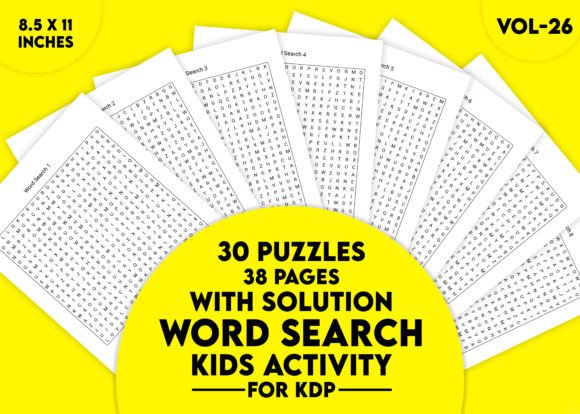
A common mistake when evaluating puzzle books is assuming all formats are created equal. Many buyers focus solely on the number of puzzles, ignoring the critical design features that make an activity usable for a child. Dismissing the 8.5 x 11 inch size and the one-puzzle-per-page layout as unnecessary extras is a fast way to buy a book that collects dust.
Why this matters: Children, especially early readers, need clear visual space. An 8.5 x 11 inch page with a single puzzle allows for large, legible letters. It reduces eye strain and the cognitive load of tracking across a crowded grid. Cramming multiple puzzles onto a single page might seem like better value, but it often leads to messy scribbles and frustrated kids who cannot follow their line of sight. A dedicated page also gives a child room to rest their finger on the grid or to draw small marks without covering up other puzzles.
What to do instead: When you open the PDF for Vol-26, check the margins and the font size on screen before you print. You should see that each puzzle has breathing room. This design is deliberately child-friendly. If you are using the puzzles on a tablet, the single-page format is perfect for annotation apps where kids can draw directly on the screen.
The Hidden Gem – Using Leftover Letters to Build Confidence
One of the most overlooked features of a well-designed word search is the hidden message or final phrase created by the leftover letters after all words are found. Many adults and kids rush through the activity, crossing off the word list and immediately closing the book. This misses the entire point of the puzzle’s structure.
Why this matters: The hidden message turns a passive scanning exercise into an active, goal-oriented challenge. It provides a tangible sense of completion beyond just crossing off a list. For a child, discovering that the leftover letters spell out a secret message or a fun fact is deeply rewarding. It reinforces the core lesson of the activity: persistence and attention to detail have a payoff.
What to do instead: Before giving the puzzle to a child, point out the leftover letters. Explain that their job is not just to find the words, but also to discover what the hidden message is. This adds a layer of mystery. You can even make it a rule: you are not allowed to say you are done until you have written the hidden message at the bottom of the page. This feature is built into the Word Search Kids Activity for KDP Vol-26, so make sure you take full advantage of it.
The Learning Curve – Matching Difficulty to Skill Level
A significant oversight is assuming that all puzzles within a book are appropriate for the same age or skill level. Jumping straight to the most difficult theme can instantly kill a beginner’s enthusiasm. Conversely, giving an advanced child only easy puzzles leads to boredom.
Why this matters: The psychological impact of a puzzle that is either too easy or too hard is negative. A child who feels overwhelmed will develop a block against the activity. A child who is bored will not build the focus and pattern-recognition skills the puzzle is designed to teach. The Word Search Kids Activity for KDP Vol-26 features a wide range of themes and difficulty levels. This is a core feature, not a design flaw.
What to do instead: Take a few minutes to preview the PDF. Look at the word lists. Do they start with shorter, common words (like “cat” or “sun”) and progress to longer, more complex vocabulary? Sort the puzzles yourself before handing them out.
- For beginners: Start with simple, horizontal words on familiar themes like animals or colors. Use the large 8.5 x 11 page to let them scan line by line.
- For intermediates: Move to puzzles with diagonal and backwards words.
- For advanced kids: Use the harder themes (like geography or science) as a reward or a challenge.
By curating the difficulty yourself, you ensure the child is always working in their “zone of proximal development” – challenged, but not overwhelmed.
The Logistics of Solutions – Why “4 Solutions Per Page” is a Smart Design Choice
It is easy to look at a solution page that has four small grids and criticize it as cramped or hard to read. This is a misunderstanding of the solution’s purpose. The solutions are not designed for the child to scan while solving; they are designed for efficient verification by the adult or teacher.
Why this matters: If every puzzle had a full-page solution, a 30-puzzle book would be 60 pages long, making it thicker and less portable. By grouping four solutions on one page, the creator saves paper and printing costs, which makes the book more affordable. More importantly, it allows you, the parent or teacher, to quickly check a child’s work without flipping through dozens of pages.
What to do instead: The main pitfall here is that a clever child might peek at the solution grid if they are in the same binder. The solution is simple: remove or photocopy the solution pages before you give the book to the child. Keep the solutions page as your own answer key. This gives you a quick reference tool to discuss mistakes in a constructive way. For example, you can say, “I see you missed the word ‘BASKET’ – let’s look at the diagonal together.”
Beyond the Puzzle – Integrating the Activity Into Your Routine
The biggest mistake you can make with any activity book is treating it as isolated busy work. Handing over a puzzle and walking away without any context or routine minimizes its educational value. The Word Search Kids Activity for KDP Vol-26 is a resource, but its impact depends entirely on how you use it.
Why this matters: Consistent, contextual learning beats sporadic activity every time. Vocabulary building and pattern recognition are cumulative skills. Using a puzzle once and forgetting about it does not build a habit.
What to do instead: Build a small routine around the puzzles.
- Weekly Theme Challenge: Do one puzzle per week that aligns with what the child is learning in school. If they are learning about space, use the space-themed puzzle.
- Vocabulary Builder: After the puzzle is solved, pick two or three words from the list and ask the child to define them or use them in a sentence. Write those sentences on the back of the printed page.
- Travel Companion: Since this is a PDF, you can print a few specific puzzles and laminate them. Use dry-erase markers for car trips or restaurant waits. The 8.5 x 11 size makes it easy to handle but sturdy enough for a clipboard.
- Group Activity: In a classroom, project the puzzle on a screen. Have students take turns pointing at the screen to find words. This turns a solo activity into a collaborative group exercise.
Practical Checks Before You Download or Print
Technical oversights can ruin the experience before the pencil even touches the paper. Assuming the PDF will look perfect on any device or print without issues is a risk you do not need to take.
Why this matters: A misaligned grid, cut-off letters, or poor resolution is instantly frustrating. If a child sees a letter that is partially cut off at the edge of the page, the puzzle is essentially broken for them. They will not understand the technical issue; they will just think the puzzle is too hard or broken.
What to do instead:
- Check your viewer: Open the PDF on your computer or tablet first. Zoom in on the grid. The letters should be crisp. If they look blurry, your viewer might be downscaling the image. Try a different PDF app.
- Print a test page: Do not print all 30 puzzles at once. Print one page first. Measure the grid if you have to. Ensure the margins are correct and the letters are not falling into the binding or trim area.
- Set your printer correctly: For a standard 8.5 x 11 inch document, select “Actual Size” or “Print to Fit” depending on your printer driver. Avoid “Scale to Fit” if it distorts the layout. Check that “Print on Both Sides” is off, unless you specifically want back-to-back pages.
By taking these few technical steps, you guarantee that the physical product matches the high potential of the digital file.
Putting It All Together
The Word Search Kids Activity for KDP Vol-26 is more than just a collection of word games. It is a carefully designed educational tool that offers hidden messages, varied difficulty, and a clean layout. The difference between a puzzle that gathers dust and one that becomes a beloved learning tool lies in the details you pay attention to. Avoid the common pitfalls of dismissing the layout, ignoring the hidden messages, skipping difficulty curation, and mishandling the printing process. When you integrate these 30 puzzles into a consistent, thoughtful routine, you are providing a child with more than just entertainment. You are building their vocabulary, their patience, and their confidence in solving problems systematically.