Word Search Kids Activity for KDP Vol-15: A Practical Puzzle Resource for Educators and Content Creators
Word search puzzles remain one of the most reliable tools for combining entertainment with cognitive development in children. Word Search Kids Activity for KDP Vol-15 delivers a structured collection of 30 themed puzzles designed specifically for young solvers. This volume presents a straightforward, no-fuss approach to puzzle creation that prioritizes clarity, usability, and educational value. Understanding what this resource offers—and where it fits within the broader landscape of children's activity books—helps educators, parents, and publishers decide whether it meets their specific needs.
Understanding the Structure and Design
At its core, this volume follows a familiar but effective format. Each puzzle presents a grid of letters with hidden words arranged horizontally, vertically, diagonally, or backward. Solvers receive a dedicated word list for each puzzle, and once all target words are located, leftover letters form a hidden message or final phrase. This secondary discovery adds a layer of satisfaction that extends beyond simple word matching.
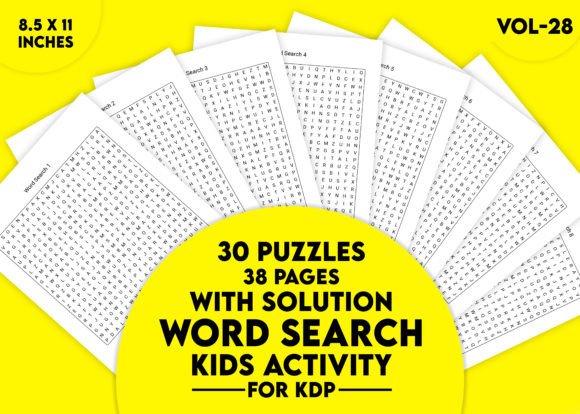
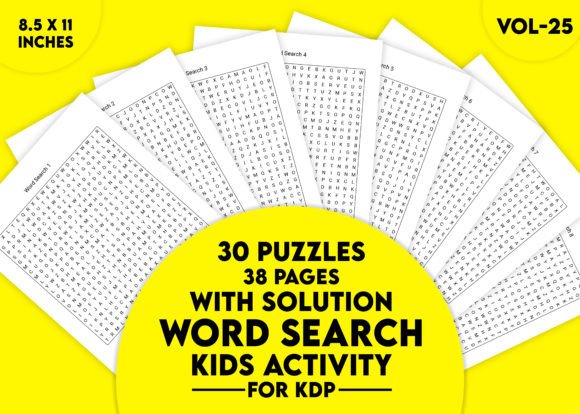
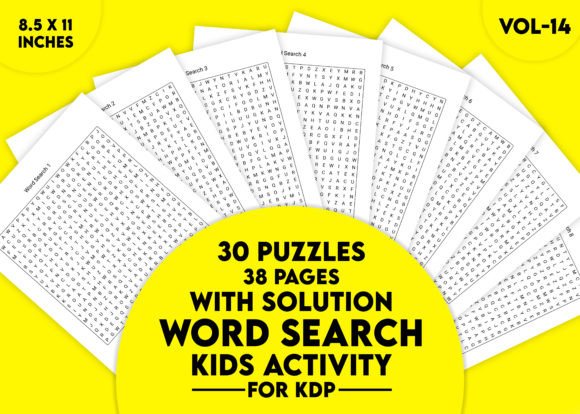
The set includes 30 distinct puzzles, each occupying its own page. Solutions are grouped four per page at the end of the file, allowing quick reference without cluttering the puzzle pages themselves. The physical dimensions—8.5 by 11 inches—provide ample space for young readers to scan letters without strain. This larger format also makes photocopying or printing straightforward, a practical consideration for classroom or homeschool use.
Thematic Variety and Difficulty Range
One of the stronger design choices in Word Search Kids Activity for KDP Vol-15 is the range of themes and difficulty levels. Not every child approaches puzzles with the same reading ability or attention span. By offering variation across the 30 puzzles, the resource accommodates both beginners who need simpler, shorter word lists and more experienced solvers ready for longer grids and trickier orientations. This tiered approach reduces frustration and keeps engagement steady over time.
Themes appear to draw from common children's interest areas—animals, seasons, holidays, occupations, nature, and everyday objects. While specific theme lists are not detailed here, the volume's structure suggests thoughtful curation rather than random word generation. This intentionality matters for parents and educators who want puzzles that reinforce vocabulary already being taught in lessons or conversations.
Practical Strengths for Educators and Parents
For anyone who has managed a classroom or a household activity session, preparation time is a real constraint. Word Search Kids Activity for KDP Vol-15 arrives as a ready-to-use PDF file. No layout work, no manual grid construction, no answer key creation. The file is formatted and printable, which means an educator can select a puzzle that matches the day's lesson theme and have copies ready in minutes.
Inclusion of solutions directly in the file removes a common pain point. When children work independently or in small groups, having answer keys available allows them to self-check or ask for help on specific words they missed. This self-correction mechanism supports learning without requiring constant adult intervention. For homeschooling parents juggling multiple children and subjects, this autonomy is valuable.
Classroom and Group Settings
Teachers working with early elementary grades will find this volume particularly useful. The single-puzzle-per-page format means each student can work on the same puzzle without confusion, or a teacher can distribute different puzzles to different students based on reading level. The 8.5 x 11-inch size also fits standard folders and binders, making storage and organization simple.
Substitute teachers and after-school program leaders often need low-prep, high-engagement activities. A word search fits that description well, and having a curated set of 30 puzzles eliminates the need to search online for quality grids or worry about inappropriate content. The hidden message feature also provides a natural stopping point and a small reward for completion.
Who Benefits Most from This Resource
While children are the end users, the primary buyers and evaluators of this resource are adults. Word Search Kids Activity for KDP Vol-15 serves several distinct audiences, each with different priorities.
- KDP Publishers and Content Creators: Those building a catalog of children's activity books will appreciate the straightforward file structure. The PDF is ready for upload, and the consistent formatting across puzzles means less time spent on interior layout. Volumes like this also serve as reference material for creators who want to study puzzle grid construction, theme selection, and solution page formatting.
- Elementary School Teachers: Educators teaching grades 1 through 4 can integrate these puzzles into literacy centers, morning work routines, or early finisher activities. The variety of themes allows alignment with curriculum units, and the difficulty range supports differentiation within a single classroom.
- Homeschooling Parents: Parents who educate at home often seek affordable, reusable resources. This volume provides 30 distinct activities that can be printed for individual children or used across multiple grade levels. The solution pages reduce grading time and allow older children to check their own work.
- Librarians and Youth Program Coordinators: Public library summer reading programs, children's activity tables, and youth groups benefit from low-cost, reproducible activities. The professional formatting and clear print quality make these puzzles suitable for distribution to families.
Real-World Usability and Presentation
Practical details often determine whether a resource gets used regularly or sits in a folder. The 8.5 x 11-inch size is a deliberate choice that accommodates children's handwriting and scanning ability. Smaller puzzles, often seen in budget activity books, can frustrate young solvers who are still developing visual tracking skills. The larger grid size in this volume reduces eye strain and allows for clearer letter spacing.
The PDF format offers flexibility. It can be printed in bulk for classroom use, displayed on a tablet or interactive whiteboard for group solving, or uploaded to a learning management system for remote access. No special software is required beyond a standard PDF reader, which keeps the barrier to use low.
Solution pages grouped four per page save paper and keep the answer key compact. This layout works well for teachers who want to post answers in a central location or for parents who prefer to keep solutions separate from the puzzle pages. The grouping does not interfere with usability, since each puzzle is numbered consistently.
Quality of Puzzle Construction
Not all word search puzzles are created equal. Some digital generators produce grids with awkward letter placement, excessive diagonal overlaps, or words that are too short to challenge. While the specific grid construction of Word Search Kids Activity for KDP Vol-15 cannot be evaluated without full inspection, the volume's production as a curated set suggests attention to word placement, readability, and balance between hidden words and filler letters.
A well-constructed puzzle ensures that every target word is accessible without requiring adult help. Words that are too well hidden—buried under long diagonals or overlapping in confusing patterns—defeat the purpose of a children's activity. The volume's stated range of difficulty implies that easier puzzles feature shorter words and simpler orientations, while harder puzzles introduce backward and diagonal placements at a pace appropriate for developing readers.
Evaluating the Long-Term Value
For educators and parents, the value of a puzzle resource lies in its repeatability and shelf life. A set of 30 puzzles can support weekly use over an entire school semester, especially if puzzles are rotated across different themes. The hidden message feature adds replay incentive, since children completing all puzzles can compare final phrases.
Content creators evaluating this volume for their own KDP publishing efforts should consider how the template-like structure could be adapted. The consistent formatting, solution page layout, and theme-based approach represent a reproducible model that can be applied to new volumes. Understanding what makes Word Search Kids Activity for KDP Vol-15 functional helps creators refine their own puzzle books before publication.
Possible Limitations to Consider
No resource is universally perfect, and acknowledging limitations helps buyers make informed decisions. This volume does not include illustrations or decorative elements on each puzzle page. Some children or parents prefer activity books with thematic borders, small icons, or coloring elements integrated into the puzzle spread. The minimal design here prioritizes clean readability over visual embellishment, which is a trade-off worth noting.
Additionally, the volume targets a specific age range, roughly 5 to 10 years old. Older children or advanced readers may find the puzzles too simple, while children still developing letter recognition might need adult support for certain grids. The difficulty range helps mitigate this, but the volume is not designed as a one-size-fits-all resource for all elementary grades.
Finally, the file is offered as a digital PDF rather than a printed book. Buyers need access to a printer, which may be a consideration for families relying solely on digital devices. However, the ability to print selected pages rather than an entire book can also be an advantage for those who want to customize usage.
Final Assessment for Potential Users
Word Search Kids Activity for KDP Vol-15 is a practical, well-structured resource that delivers what it promises: 30 clear, themed word search puzzles with included solutions in a ready-to-print format. Its strength lies not in flashy features or elaborate design but in reliable functionality and thoughtful attention to the needs of young solvers and the adults who guide them. For teachers building a toolkit of low-prep literacy activities, homeschooling parents seeking structured independent work, and content creators studying effective puzzle book formats, this volume offers genuine utility. The format is standard, the execution is clean, and the value is straightforward—exactly what a busy adult needs when choosing a resource that will actually get used.