Why 687 Puzzles Sudoku EASY Is the KDP Interior You Have Been Looking For
If you are building a low-content or no-content publishing business on Amazon KDP, you already know that the interior of your book matters just as much as the cover. Readers expect clean layouts, properly formatted puzzles, and a product that feels professional from the moment they open it. The 687 Puzzles Sudoku EASY – KDP Interior is designed to meet those expectations, but only if you use it correctly. Many publishers jump into the KDP marketplace without fully understanding what makes an interior sell, and that is where mistakes happen. Let us walk through the most common pitfalls and how to avoid them so your Sudoku puzzle book stands out for all the right reasons.
What the 687 Puzzles Sudoku EASY Interior Actually Includes
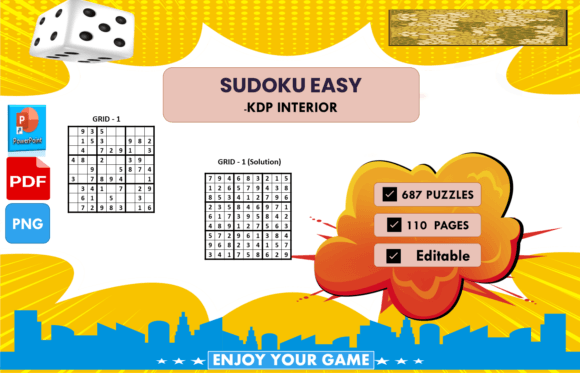
Before diving into the mistakes, it helps to know exactly what you are working with. This interior file comes as a PDF, PPT, and PNG set, giving you flexibility depending on your workflow. The dimensions are 8.5 x 11 inches, which is the standard US letter size and one of the most popular choices for puzzle books on KDP. You get 250 pages total, with 100 editable slides in the PPT version, meaning you can tweak fonts, colors, or add your own branding elements if you are comfortable with PowerPoint. There is no bleed required, which simplifies the upload process significantly. Every page is high resolution and print-ready, including the solutions at the back. These details might sound basic, but overlooking even one can cause delays, rejections, or poor reviews.
Mistake One: Assuming All KDP Interiors Are the Same
One of the most common errors new publishers make is treating every interior file as interchangeable. They download a Sudoku puzzle book interior, upload it to KDP without checking the specifications, and wonder why the preview looks off. The 687 Puzzles Sudoku EASY interior has been tested and formatted specifically for KDP, which means the trim size, margins, and resolution all match Amazon's requirements. But that does not mean you can skip the validation step. Always preview the PDF in KDP's online tool before hitting publish. Check that puzzles are centered, numbers are crisp, and the solution pages align correctly. A small misalignment in the preview can lead to a poor print run, and once books are sold, fixing that mistake costs time and money.
A better approach: Download the PDF version, open it in Adobe Acrobat or a reliable PDF viewer, and scroll through several pages. Look for any cut-off elements, uneven spacing, or fuzzy text. Then upload to KDP and use their live preview feature to see exactly how the interior will look on a physical page. This two-step check takes ten minutes and saves you from potential headaches later.
Mistake Two: Overlooking the No-Bleed Requirement
Bleed settings are one of the most misunderstood aspects of KDP formatting. Some publishers assume that all books need bleed, but that is not true. The 687 Puzzles Sudoku EASY interior is designed without bleed, which is perfectly fine for puzzle books because there is no artwork or background color that extends to the edge of the page. If you accidentally upload this file as a bleed-enabled book, KDP will reject it or produce a distorted preview. You might then waste time resizing or reformatting something that was already correct.
What to do: When you create your KDP listing, select "No bleed" in the interior setup. Confirm that your uploaded PDF matches this setting. If you are using the PPT version to make edits, ensure you do not add any elements that extend beyond the trim area. Keep all puzzles and text within the safe zone, about 0.25 inches from each edge. This keeps the print clean and avoids any awkward cropping.
Mistake Three: Ignoring the Editable PPT File's Potential
Many publishers treat the PPT file as an afterthought, but it is one of the most valuable components of this interior set. With 100 editable slides, you can customize the interior to match your brand. You might want to add a logo on the title page, change the puzzle font to match your series aesthetic, or include a short introduction thanking the reader. These small touches make your book feel unique rather than like a generic template. The common mistake is to skip this step entirely and upload the PDF as-is, which means your book looks exactly like hundreds of other puzzle books on Amazon. That makes it harder to stand out and build a loyal audience.
A better strategy: Open the PPT file, make a few simple edits, and then export a fresh PDF for uploading. Keep the changes minimal so you do not accidentally disrupt the formatting. Add a brand name, a one-sentence description inside, and maybe a different accent color for the puzzle numbers. Export as PDF, check the resolution, and then upload. This takes an hour at most and gives your book a professional edge.
Mistake Four: Forgetting That Puzzles Need to Be Enjoyable, Not Just Printable
It is easy to focus on dimensions and file formats and forget about the reader experience. The "EASY" in 687 Puzzles Sudoku EASY means these puzzles are designed for beginners or people who want a relaxing puzzle session without frustration. But if the layout is cramped, the font is too small, or the numbers bleed into the grid lines, the user experience suffers. Even if the interior is technically print-ready, it may not be reader-ready. The most common complaint in puzzle book reviews is that the numbers are difficult to read or the grids are too small. The 8.5 x 11 inch format gives you plenty of space, so use it wisely. Each puzzle should have enough room around it for the reader to make notes or write lightly in the margins if they choose.
How to avoid this: When you preview the PDF, test it on a real sheet of paper if possible. Print one page at actual size and see how it looks and feels. Can you easily see the numbers from a comfortable reading distance? Is there enough white space so the page does not feel cluttered? If you are satisfied, your readers likely will be too. If something feels off, consider adjusting the font size or grid spacing in the PPT version before exporting.
Mistake Five: Neglecting the Solution Pages
The solutions are included in this interior, which is a huge selling point. Many puzzle book publishers forget to verify that the solutions match the puzzles correctly. Even a single mismatch can lead to negative reviews. And because the solutions are usually at the back of the book, a formatting error there might go unnoticed until a customer complains. The 687 Puzzles Sudoku EASY interior has been tested, but you should still spot-check a few puzzles and their corresponding solutions to be certain. This is especially important if you made any edits to the PPT file, because changes can sometimes shift the solution order.
Practical advice: Pick five random puzzles throughout the book, solve them partially or fully, and check the solutions. If everything matches, you are good to go. If you find an error, correct the source file immediately rather than trying to patch it in the PDF. Consistency builds trust, and trust leads to repeat buyers and positive feedback.
Mistake Six: Not Realizing You Still Need a Cover
The interior is only half the product. This package includes the interior only, so you need to create your own front and back covers. Some publishers buy an interior and then rush to upload a generic cover they made in Canva in ten minutes. That approach rarely works well. The cover is the first thing potential customers see on Amazon, and a weak cover can make even a perfect interior invisible. The 8.5 x 11 inch trim size means your cover should match those exact dimensions, including spine width, which depends on your page count. With 250 pages, the spine will be roughly 0.5 inches thick, depending on the paper type you choose.
What to do: Calculate the exact spine width using the KDP cover calculator, then design a cover that communicates the value of your book. Use clear fonts, a simple but attractive color scheme, and mention that the book contains 687 easy puzzles with solutions. If design is not your strength, consider hiring a freelancer or using a pre-made cover template designed for 8.5 x 11 puzzle books. A good cover and a solid interior together create a package that sells.
Mistake Seven: Underestimating the Power of Reader Feedback
Finally, do not ignore the feedback loop. The 687 Puzzles Sudoku EASY interior is designed for performance, but real-world reviews tell you if something needs adjusting. When customers leave positive feedback, take note of what they liked. If someone mentions that the puzzles are easy to read and the layout is clean, you know you are on the right track. If you ever receive a less-than-perfect review, treat it as data. Maybe the font is too small for older readers, or the spacing between puzzles could be improved. Use that information to refine your next edition.
Many successful KDP publishers build a series of puzzle books, and each iteration gets better because they pay attention to what readers actually say. The 687 Puzzles Sudoku EASY interior gives you a solid foundation, but your attention to detail and willingness to improve will set you apart from the competition.
By avoiding these common mistakes, you position yourself for better reviews, fewer returns, and a stronger presence in the KDP marketplace. Take the time to check the formatting, make thoughtful edits to the PPT version, ensure the solutions are accurate, and pair the interior with a professional cover. That combination is what turns a printable interior into a product that earns consistent positive feedback — the kind of ⭐⭐⭐⭐⭐ reviews that keep your business growing.