Understanding the Expenses Journal and How It Shapes Your Financial Tracking
Keeping track of where your money goes is one of the most fundamental habits in personal finance. Yet the method you choose can dramatically affect how consistent you remain and how useful the resulting data becomes. An expenses journal is a dedicated record where you log every purchase, bill, and discretionary spend. Unlike a budgeting app that auto-categorizes transactions, an expenses journal forces you to engage with each outflow manually. This simple act of writing or typing entries often leads to greater awareness, but it also comes with tradeoffs worth examining before you commit to a system.
What Makes an Expenses Journal Distinct
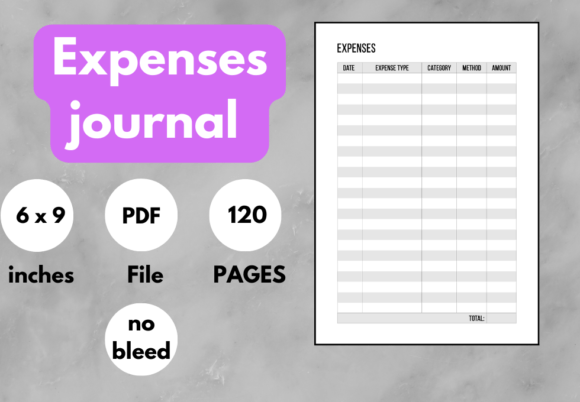
At its core, an expenses journal is a chronological log of your spending. You record the date, amount, category, and sometimes a brief note about each transaction. What sets it apart from other tracking methods is the deliberate, hands-on nature of the process. When you use an expenses journal, you are not passively importing data from a bank feed. You are actively deciding what counts as an expense and how to classify it.
This distinction matters because the act of recording creates a moment of reflection. You see the purchase happening in real time, or shortly after, and you become more conscious of patterns. Many people find that maintaining an expenses journal reduces impulsive buying simply because they know they will have to write it down later. This behavioral nudge is one of the strongest arguments for choosing a manual journal over an automated tool.
Another defining feature is flexibility. An expenses journal can be a physical notebook, a spreadsheet, or a dedicated digital app that mimics a ledger. There is no single format, so you can adapt the structure to match your lifestyle. Some people prefer a minimalist layout with just date and amount, while others include columns for payment method, category, and even a mood indicator to track emotional spending.
How an Expenses Journal Compares to Other Approaches
To decide whether an expenses journal is right for you, it helps to see how it stacks up against common alternatives. Each method serves a different purpose and fits different habits.
Expenses Journal Versus Budgeting Apps
Budgeting apps automatically sync with your bank accounts and categorize transactions using algorithms. They save time and reduce manual effort. However, they can feel detached from the reality of your spending. An expenses journal, by contrast, requires you to touch each transaction. This hands-on approach often leads to deeper awareness, but it also demands more discipline. If you are the type of person who forgets to log entries for several days, an app might be more reliable. If you want to build mindfulness around money, a journal could be more effective.
Expenses Journal Versus Spreadsheets
Spreadsheets offer more control than most apps and can function as a digital expenses journal. You can create formulas, pivot tables, and charts. The difference is often about structure. A spreadsheet gives you endless customization but can become complex quickly. A dedicated expenses journal, especially a physical one, imposes a simpler framework that is harder to overcomplicate. For people who get lost in spreadsheet design rather than actually tracking spending, a journal keeps the focus on the data instead of the tool.
Expenses Journal Versus Simple Note-Taking
Some people track expenses by jotting them down in a notes app or on a piece of paper without a consistent format. While better than nothing, this approach lacks organization and makes analysis difficult. An expenses journal introduces consistent fields and categories, which allows you to review your spending over time. The structure is what turns raw data into useful information. Without it, you end up with a list of numbers that is hard to interpret.
Strengths of an Expenses Journal That Stand Out
There are several concrete benefits that make an expenses journal appealing for certain users. First, the privacy factor is significant. A physical journal never shares your data with third parties, and a local digital file can be kept offline. For people who are uncomfortable linking their bank accounts to cloud-based apps, this is a major advantage.
Second, the ritual of recording can become a form of financial meditation. Taking five minutes each evening to log the day's spending helps you stay connected to your financial life. Over time, this habit builds a detailed personal history that reveals seasonal patterns, recurring waste, and progress toward savings goals.
Third, an expenses journal is completely customizable. You can add columns for notes about why you made a purchase, whether it brought satisfaction, or whether you would buy it again. This qualitative layer is hard to replicate in automated systems. It turns a simple log into a tool for understanding your values and priorities.
Finally, the journal is portable and resilient. A paper notebook never runs out of battery, and a simple spreadsheet can be opened on almost any device. You are not dependent on a specific app that might change its pricing model or shut down.
Tradeoffs and Limitations to Consider
No method is perfect, and an expenses journal has real drawbacks. The most obvious is the time commitment. Recording every transaction manually takes effort, and if you fall behind, the backlog can feel overwhelming. Many people start strong and then abandon their journal within a few weeks because the maintenance becomes tedious.
Another limitation is the lack of real-time analytics. Automated apps can show you your spending trends instantly, with charts and alerts. With an expenses journal, you have to do your own analysis or set aside time to review the data. For people who want instant feedback, this can feel inefficient.
There is also the risk of inconsistency. If you do not categorize expenses the same way each time, your data becomes less useful. For example, labeling a coffee as "food" one day and "entertainment" another day will distort your reports. Automated tools enforce category consistency, while a journal depends on your own discipline.
Finally, a physical journal can be lost or damaged. A digital file can be accidentally deleted. Relying on a single record means you need to be intentional about backups. This is less of a concern with cloud-based apps that store your data automatically.
When an Expenses Journal Is the Right Choice
An expenses journal works best for people who value process over speed. If you want to slow down your spending and build awareness, the manual effort is actually a feature, not a bug. It is also ideal for those who are skeptical of sharing financial data with third parties or who want complete control over their categories and format.
If you are a freelancer or small business owner who needs to track expenses for tax purposes, a journal can be a useful complement to your accounting system. You can use it to capture out-of-pocket costs and then transfer them to your formal records. Similarly, if you are helping a family member manage their money, a simple journal can be less intimidating than a complex app.
For people who are new to expense tracking and want to build the habit without investing in a paid tool, starting with an expenses journal is a low-risk way to begin. You can always migrate to a more automated system later if you find the manual process unsustainable.
When You Might Need Another Option
If your main goal is to get a quick overview of your spending without daily effort, an automated app will serve you better. The same is true if you have multiple accounts and credit cards and want to see everything in one place without manual consolidation.
An expenses journal is also less suitable for people who travel frequently or who make many small purchases throughout the day. The recording burden can become impractical. In those cases, a mobile app with receipt scanning and auto-categorization will save time and reduce friction.
If you need to track expenses for a partner or a household with shared accounts, a single journal can become confusing. A shared digital tool with multi-user access is often a cleaner solution. Similarly, if you are trying to identify specific trends like how much you spend on dining out each month, an automated report will get you the answer faster than flipping through journal pages.
Practical Examples of Using an Expenses Journal
Consider a scenario where you want to reduce your monthly food spending. With an expenses journal, you would log every grocery trip, coffee, and restaurant meal. After a month, you could go through the entries and highlight patterns. Perhaps you notice that you buy lunch at work three times a week because you forget to pack one. The journal itself does not tell you this, but reviewing the entries reveals the behavior. That insight leads to a simple change: prepare lunch the night before.
Another example involves someone who wants to track the true cost of a hobby, like photography. By adding a separate category for camera gear, prints, and online storage, the journal provides a clear picture of what that hobby actually costs. Without the journal, these purchases might get lost in miscellaneous spending. With it, you can decide whether the expense aligns with your priorities.
For someone who is saving for a large purchase, an expenses journal can serve as a daily reminder of the goal. Each entry is a small choice that either moves you closer or further away. Over time, the journal becomes a record of your commitment.
Decision Factors to Help You Choose
Consider these factors when deciding whether an expenses journal fits your situation:
- Time available: Do you have five to ten minutes each day to update your journal? If not, a more automated method may be better.
- Desired depth: Do you want just the numbers, or do you also want to capture context and emotions around spending?
- Privacy comfort: Are you okay with linking your bank accounts to a third-party service?
- Analysis needs: Do you need instant charts and trend reports, or are you willing to review your data manually?
- Consistency: Are you able to maintain a consistent categorization system on your own?
Answering these questions honestly will guide you toward the right tool. An expenses journal excels when you prioritize awareness and control over convenience and speed. For many people, the ideal setup is actually a hybrid: use a journal for daily tracking and run a monthly automated report from your bank to catch anything you missed.
Making Your Decision Practical
If you decide to try an expenses journal, start small. Commit to logging everything for one week using a simple format. After that week, evaluate whether the process felt manageable and whether the insights you gained were worth the effort. You can always adjust the format or switch to a different method later. The goal is not to find the perfect system on the first try, but to build a habit that helps you understand and control your spending.
An expenses journal is not a magical solution. It is a tool with specific strengths and clear tradeoffs. When matched to the right user and the right context, it can transform how you relate to your money. When used in the wrong situation, it becomes just another chore. The key is knowing what you truly need from a tracking method and choosing accordingly. By being honest about your habits and priorities, you can decide whether an expenses journal belongs in your financial toolkit.