Savings Tracker Log Book: A Practical Tool for Financial Goal Setting
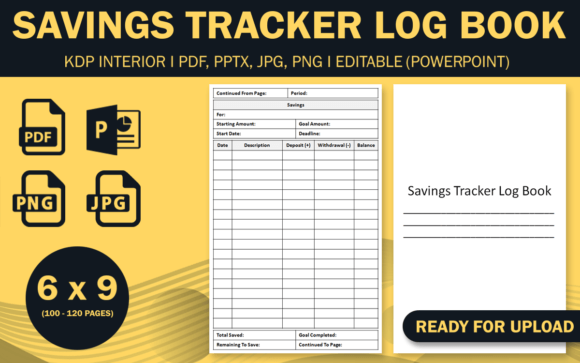
Tracking personal finances can feel like an abstract exercise until you put pen to paper or digits to screen. A Savings Tracker Log Book is a structured document or notebook designed to help individuals record, monitor, and review their savings over time. Rather than relying on memory or scattered notes, this log provides a dedicated space to log deposits, track progress toward specific saving targets, and observe patterns in your saving behavior. The downloadable package typically includes an editable PowerPoint source file (PPTX), two PDF interiors ready for upload to KDP or print (tested on KDP), a JPG file, and a PNG file. The trim size is 6 inches by 9 inches with no bleed, and interior options come in 100 and 120 pages, all at high resolution.
For anyone researching ways to organize their saving efforts, this type of log book offers a blend of simplicity and structure. It is not a budgeting app or a financial planning software—it is a focused record-keeping tool. Understanding what it includes, how it works, and what it does not do can help you decide whether it fits your current financial routine.
What a Savings Tracker Log Book Includes
The typical Savings Tracker Log Book is built around repeated entry pages where you can log each saving event. Common fields include the date, amount saved, the source or purpose of the savings (such as an emergency fund, vacation, or retirement account), and a running total or balance column. Some versions also include goal-setting pages at the front, monthly summary pages, and space for notes or reflections on spending habits.
The downloadable files give you flexibility. The editable PowerPoint source file means you can customize headings, add your own categories, or change the design elements before printing. The two PDF interiors are ready to upload directly to KDP or to print at home or through a print shop. The JPG and PNG files can be used for digital planning apps or as cover images. With trim size 6x9 inches and no bleed, the format is standard for personal planners and notebooks, making it easy to fit into a binder or carry in a bag.
The availability of 100-page and 120-page interiors means you can choose a thickness that matches your saving frequency. If you save weekly, a 100-page log might last about two years. If you save more often or want extra space for notes, the 120-page version gives you additional room. Both are high-resolution, which matters if you intend to print them professionally.
Why Someone Might Be Interested in This Log Book
People often turn to a savings tracker when they want more visibility into where their money is going and how consistently they are building their reserves. A log book externalizes the tracking process, reducing reliance on memory and providing a physical or digital record you can review over time.
Another reason is the desire to set and pursue specific savings goals. Without a tracking mechanism, it is easy to lose sight of a target or to feel that progress is too slow. The act of recording each deposit can create a sense of accountability and momentum. Some users also find that seeing their total grow on paper or on screen reinforces positive habits and helps them stay motivated during longer saving periods.
For individuals who prefer analog or hybrid systems, a log book offers a tactile experience that digital tools sometimes lack. Writing down amounts by hand can feel more deliberate and mindful, which may lead to better financial awareness. At the same time, the editable source file allows for digital customization if you want to type entries or adjust the layout before printing.
Benefits and Tradeoffs to Consider
One clear benefit of using a dedicated savings tracker is that it keeps all your saving records in one place. Instead of scattered sticky notes, random spreadsheet cells, or forgotten app notifications, you have a consistent format for every entry. This makes it easier to review your progress at a glance and to spot trends—such as months where you saved more or less than usual.
The log book also supports goal clarity. By writing down a target amount and then logging each contribution, you can measure how close you are to reaching your objective. This can be especially helpful for medium-term goals like a down payment, a home renovation, or a major purchase, where progress can feel incremental.
On the tradeoff side, a log book requires regular input. If you are not consistent about recording your savings, the log will have gaps and lose its usefulness. This is true for any tracking system, but with a physical log you also have to remember to carry it with you or keep it accessible. Unlike an app that can sync automatically with your bank account, a manual log depends entirely on your discipline.
Another consideration is that a savings tracker does not manage your money for you. It is a record-keeping tool, not a budgeting or investment platform. If you are looking for automatic categorization, spending analysis, or investment tracking, you would need to combine this log book with other tools or consider a different solution altogether.
The 6x9 inch trim size is a tradeoff in itself. It is large enough to write in comfortably but small enough to fit in a bag. However, if you prefer a pocket-size notebook or a larger desk planner, this size may not be ideal. The no-bleed design means the content stays within safe margins, which is good for KDP uploads but also means the print area is slightly smaller than the page size.
Scenarios Where This Log Book Is a Strong Fit
A Savings Tracker Log Book works well for individuals who are actively saving for one or more specific goals and want a simple, low-tech way to monitor progress. If you prefer writing things down by hand, or if you like having a physical record that you can flip through and annotate, this format is likely to suit you.
It is also a good match for people who are using a cash envelope system, a separate savings account, or any method where deposits happen in discrete amounts rather than through automatic transfers. Each deposit can be logged individually, giving you a clear picture of how your savings accumulate over time.
For KDP publishers or small print-on-demand sellers, the included PDF files that have been tested on KDP are a practical asset. You can upload the interiors directly without worrying about formatting issues, and the editable PPTX file allows you to rebrand or modify the design for your own audience. The high-resolution ensures professional print quality.
Another strong fit is for people who are teaching themselves or others about saving habits. Parents, educators, or financial coaches can use the log book as a practice tool to demonstrate the value of regular saving. The structured format removes the need to design a tracking system from scratch, so you can focus on the habit itself.
When Alternatives Might Be Worth Considering
If you prefer a fully digital system that syncs automatically with your bank accounts and categorizes transactions for you, a manual log book may feel like extra work. Spreadsheets, budgeting apps, and personal finance software can offer real-time insights and reduce the need for manual entry. In that case, the log book would be a supplementary tool at best.
Another situation where alternatives make sense is if your saving involves multiple accounts, investments, or complex allocations. A simple log book with date, amount, and balance fields may not capture the detail you need. You might require a multi-column ledger, a spreadsheet with formulas, or a dedicated investment tracking app.
If you are not committed to recording each deposit regularly, the log book will quickly become outdated. Inconsistent tracking can lead to frustration and a sense of failure. In that scenario, an automated solution or a simpler check-in system (like a monthly review) might be more sustainable.
Also, consider whether you need a tool that integrates with other parts of your financial life. If you already maintain a detailed budget, expense tracker, or net worth sheet, an additional savings log might create redundancy. In that case, you could simply add a savings column to your existing system rather than starting a separate book.
Practical Decision-Making Insights
When evaluating whether this Savings Tracker Log Book aligns with your needs, start by clarifying what you want to achieve. If your goal is to build a simple, consistent record of your savings contributions and to see your progress over time, this tool is well-suited. If your priority is automation, integration with bank data, or advanced analysis, you will likely need to pair it with other resources or choose a different solution.
Consider how often you save. If you make deposits weekly or monthly, the 100-page interior will last you a long time. If you save daily or have multiple saving streams, the 120-page version gives you more room. Also think about whether you prefer a physical book or a digital file you can edit. The PPTX file gives you flexibility to change the layout, add fields, or print only the pages you need.
Another useful step is to test the format with a short trial. Print a few pages from the PDF and use them for a week or two. See whether the act of recording your savings feels helpful or burdensome. This can tell you more about your fit with the tool than reading reviews alone.
Finally, consider the long-term value. A one-time purchase of a log book that you use for a year or more is a small investment compared to the financial awareness and goal progress it can support. If the structure helps you save even a little more consistently, it can pay for itself many times over.
Ultimately, the best tracking tool is the one you will actually use. The Savings Tracker Log Book offers a straightforward, customizable, and print-ready option for anyone who wants to bring more intentionality to their saving habits. By matching the format to your routine and preferences, you can turn a simple log into a practical ally for reaching your financial goals.