Jewelry Making Logbook KDP Interior
In the world of visual design and print-on-demand, the line between a successful brand asset and a forgotten file is often defined by the quality of its interior architecture. For creators, jewelry business owners, and graphic designers exploring self-publishing, a carefully constructed Jewelry Making Logbook KDP Interior is far more than a simple notepad—it is a strategic creative asset. It provides the underlying grid, typographic rhythm, and visual clarity that elevates a functional record into a polished, professional product.
From a graphic design perspective, every detail of a book's interior communicates intent. The margins, header styles, and consistency of line weights all contribute to the user experience (UX) of the reader. A well-structured logbook for jewelry making, with its organized spaces for sketching, inventory tracking, and stone settings, speaks directly to a niche audience that values precision and craftsmanship. This alignment between visual presentation and target audience expectations is the cornerstone of effective brand identity.
The Role of Visual Hierarchy in Creative Journals
When designing or selecting a KDP interior, the application of clear visual hierarchy is crucial. A professional layout guides the eye naturally from one task to the next—be it sketching a ring design, logging material costs, or listing supplier contacts. The best interiors act as silent facilitators of creativity. By using consistent spacing, a restrained typography palette, and a clear color palette (even in grayscale), the designer ensures the content remains the star. This discipline is what transforms a generic logbook into a premium notebook that reinforces modern aesthetics and professionalism.
For graphic designers building brand identity systems for jewelry artisans or small studios, recommending or sourcing a high-quality interior file adds immense value. It extends the brand's visual language from the website and social media graphics directly into the hands of the user. This creates a cohesive brand experience that feels intentional and curated.
Why Specification Details Define Quality
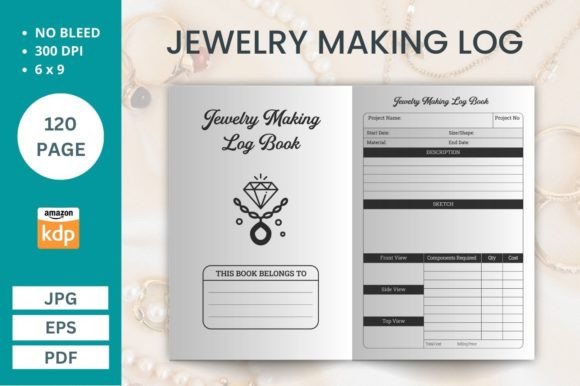
An informed designer knows that specifications like bleed, resolution, and file type are non-negotiable for professional print results. This particular interior includes 120 pages in a 6×9 format, a size favored for its portability and readability. The 300 DPI resolution ensures that every line and sketch renders with sharp detail—critical for a jewelry logbook where fine details matter. The inclusion of multiple file formats—JPG, EPS, and PDF—demonstrates a deep understanding of diverse creative workflows. Whether you are uploading directly to Amazon KDP or taking the EPS into Adobe Illustrator for further editorial design tweaks, the flexibility is built in.
- Print-Ready Precision: The "No Bleed" and "Ready to Upload" specifications streamline the technical process, reducing errors during KDP submission. This is a huge time-saver for busy designers and publishers.
- High-Resolution Assets: The use of 300 DPI imagery and vectors ensures the final print looks crisp and professional, directly impacting how users perceive the brand's value.
- Versatile Applications: Beyond a simple diary or journal, this structure works beautifully for workshop planners, inventory trackers, and even client consultation notebooks for a jewelry business.
Integrating Logbook Design Into Your Brand Strategy
A well-designed logbook is a powerful touchpoint in a larger brand ecosystem. It serves as an extension of the brand's visual identity into the physical or digital product space. For a jewelry designer, handing a client a custom branded logbook during a consultation instantly conveys expertise and attention to detail. In digital marketing campaigns, the visuals from the interior can be repurposed as social media graphics or used in packaging design inserts. The consistency of the layout—when applied across web design, UI elements, and print materials—reinforces brand recall and professionalism.
When creators invest in a cohesive interior for their kdp publishing projects, they are investing in the overall user experience (UX) of their audience. The predictable structure and thoughtful spacing reduce cognitive load, allowing the jewelry maker to focus on their craft rather than fighting a cluttered page layout. This is the essence of good visual communication.
Practical Workflow Applications for Designers
As a graphic designer, you can leverage these pre-made interiors in several ways:
- Client Gifts & Merchandise: Offer a personalized journal as part of a rebranding package for a jewelry artisanal brand.
- Digital Products: Sell the interior as a standalone creative asset in your online store, targeting hobbyists and small business owners.
- Workshop Materials: Design branded workshop kits that include the logbook for handcraft and jewelry-making classes.
These applications bridge the gap between traditional print design and modern creative projects, providing tangible value that screens alone cannot offer.
Ultimately, the decision to use a meticulously crafted interior template like this one is a decision to prioritize quality, usability, and aesthetic cohesion. In a marketplace filled with generic offerings, these design assets help you stand out by delivering a premium, professional experience. Whether you are sketching a new gold setting, tracking inventory, or building a brand from the ground up, the right interior framework can make all the difference in elevating your work from simple documentation to a true reflection of exceptional craft and thoughtful design.